
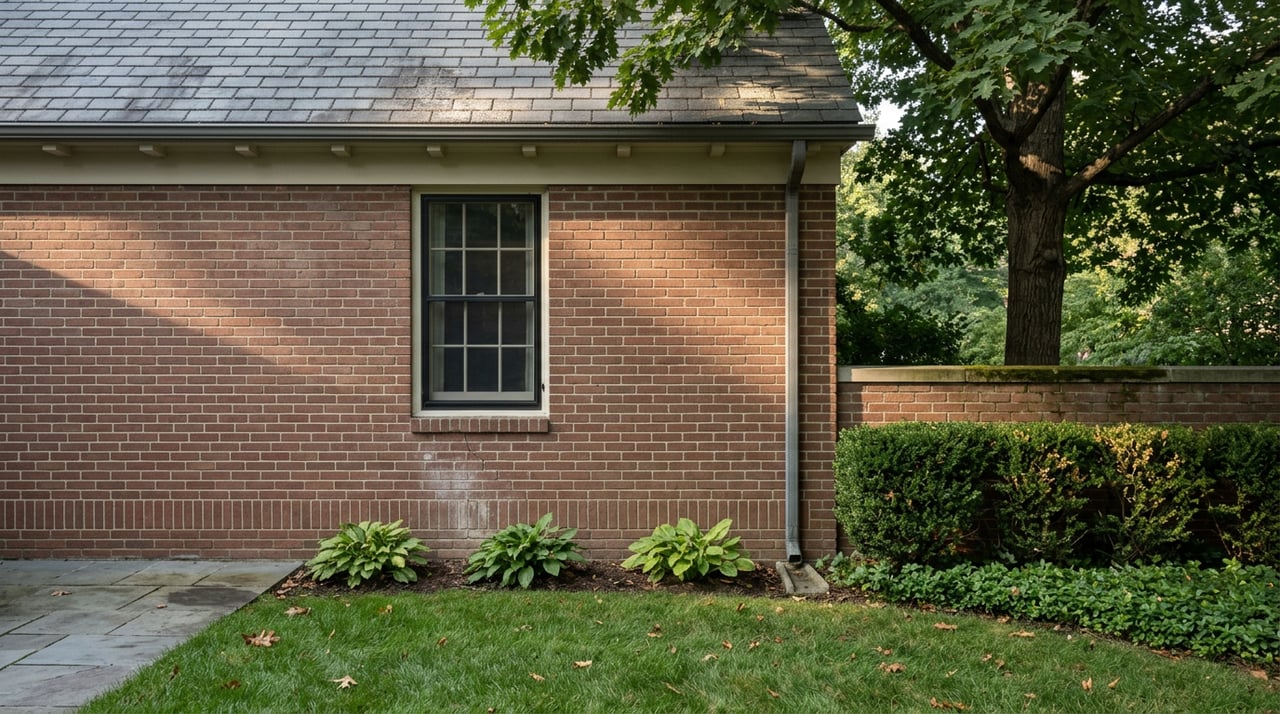
In the mid-1920s, a builder marketing a new house on the 3300 block of Quesada Street NW called it "ultra modern" for its "hot water heat, oak floors throughout, electric lighting, and Frigidaire refrigeration." The asking price was $14,500. A century later, that same phrase, hot water heat, is exactly the detail quietly complicating home sales on some of Chevy Chase, DC's most desirable blocks.
Hot water heat in a 1920s house usually meant an oil-fired boiler, and an oil-fired boiler usually meant a steel tank buried somewhere in the side yard or under the porch. Many of those tanks are still there. And this summer, the District government just changed the rule that used to force a resolution to the question of what to do with them, in a way that makes the timing of a sale murkier, not simpler, for anyone selling or buying an older Chevy Chase home right now.
The rule that used to force the issue
Since 2020, District regulations have required that underground storage tanks (USTs) older than 30 years be removed, with a compliance deadline of February 21, 2025. That deadline has already passed. But according to legal analysis from Holland & Knight, many of the tightness-testing and removal requirements tied to that rule were not observed in practice, largely because they proved too costly and burdensome to enforce consistently.
The District's Department of Energy and Environment (DOEE) noticed the same thing. In a Second Proposed Rulemaking published in the D.C. Register on June 26, 2026, DOEE proposed scrapping the flat removal mandate for aged tanks in favor of a testing regime: owners of tanks older than 30 years could keep operating them indefinitely as long as they run a tank tightness test every three years and report the results. Only a failed test would trigger a mandatory closure, and even then the owner would get a year to comply.
DOEE laid out its reasoning when it first floated this approach in a September 2025 rulemaking notice, stating that the old removal mandate "poses an undue burden on UST owners and operators" without meaningfully reducing risk, and the June 2026 reproposal carries that same rationale forward. The public comment period on the second proposal closed July 26, 2026, and DOEE is now reviewing feedback before it finalizes anything.
That word "before" matters. Right now, in August 2026, the 2020 removal mandate is still the technical legal standard in the District, even though the agency that enforces it has said twice in writing that it doesn't intend to hold that line. That is not a settled rule. It is a rule in transition, and transitions are exactly where closings get stuck.
Why this shows up more in Chevy Chase than in newer neighborhoods
Chevy Chase DC grew out of farmland developed by the Chevy Chase Land Company, which brought an electric streetcar line up Connecticut Avenue as part of its suburban buildout, and the Historic Chevy Chase DC nonprofit dates the community's founding to around 1907, with the neighborhood filling in substantially through the 1920s. The District's own Historic District nomination documents a wave of mail-order catalog homes built in that decade, including Lewis Manufacturing Company designs at 3932 McKinley Street NW, 5526 39th Street NW, and a twin house at 3808 and 3810 Legation Street NW, alongside two Gordon Van-Tine kit houses elsewhere in the district. The nomination also finds that most homes in the district are Colonial Revival in style, two or two-and-a-half stories, built with a central hall plan and a side gable roof, the same basic form as that Quesada Street kit house.
Homes from this era predate the years when natural gas heat became the default in this part of Washington. Oil heat, delivered by truck and stored in a buried tank, was the practical alternative for decades before most of these houses were eventually converted to gas. That means the age of the housing stock itself, not anything unusual about how these homes were built or maintained, is the reason a Chevy Chase seller is more likely to run into a tank question than a seller in a subdivision built after 1980.
Two different disclosure rules, depending on what you're selling
DC law does not treat every property transfer the same way. Under the District's UST Real Estate Transfer Disclosure requirements, the obligation to disclose a known tank falls on sellers of single-family homes. Sellers of individual condo or co-op units are exempt.
| Property type | Written UST disclosure required before contract? |
|---|---|
| Single-family home | Yes, before the buyer signs |
| Condo or co-op unit | No, individual unit sales are exempt under DC law |
This split matters in a neighborhood like Chevy Chase, where a buyer weighing a catalog-era single-family house against one of the older brick condo buildings along Connecticut Avenue is not just comparing square footage and price. They are comparing two different sets of legal obligations attached to the same underlying question: was this building ever heated by oil, and if so, what happened to the tank.
What sellers of older Chevy Chase homes should do now
Waiting for DOEE to finalize its new rule is not a strategy, since nobody can say with certainty when that will happen or exactly how enforcement will look in the meantime. A few steps make sense regardless of which version of the regulation is in effect when you go to settlement.
- Check what documentation already exists. DC building permit and mortgage records from the 1920s are detailed enough that local historians have used them to authenticate individual kit houses by manufacturer. If your home has ever had permitted heating system work, there may be a paper trail worth pulling before you list.
- Don't rely on "I don't know" as a final answer. If you genuinely have no knowledge of a tank, that is a legitimate disclosure response, but it does not protect a buyer's financing timeline if a tank turns up later during inspection.
- If a tank was removed by a previous owner, ask for the closure documentation now, not during a 30-day contract period. Soil sample results, photos, and a licensed contractor's report are the difference between a five-minute conversation and a delayed closing.
- Assume your buyer's lender may hold a higher bar than the state does. FHA loans, in particular, generally require underground tank issues to be resolved before closing, independent of whatever DC's own testing-versus-removal debate ultimately decides.
- Build the timeline into your listing plan, not your contract negotiations. A tank sweep or a tightness test takes time to schedule and longer if it turns up a problem. Handling it before a buyer's inspection period starts keeps you in control of the outcome.
What buyers should watch for
If you're under contract on a pre-1935 Chevy Chase home, raise the tank question during your inspection contingency period, not after. A regulatory softening at the District level does not automatically translate into approval from your specific lender, and conventional and FHA underwriters have historically treated a known, unresolved underground tank as a collateral problem regardless of what state law currently requires. The gap between what DC will tolerate and what your mortgage will tolerate is where deals stall.
Frequently asked questions
Does every old Chevy Chase house have an oil tank? No. Many were converted decades ago and the original tank was removed or professionally closed at that time. The point isn't that every home has one, it's that the housing stock's age makes it common enough to ask about directly rather than assume it isn't an issue.
If DC is easing the removal requirement, does that mean I don't need to deal with a tank before selling? Not necessarily. The rule change addresses what the District requires. It has no bearing on what your buyer's lender requires, and lenders have generally been more conservative than the state on this specific issue.
Does this apply if I'm selling a condo in one of the older Connecticut Avenue buildings? DC's written UST disclosure requirement applies to single-family home sales. Individual condo and co-op unit sales are exempt under the current disclosure rule.
An older home in Chevy Chase carries a hundred years of character that newer construction can't replicate, and a rule change in the middle of a legal transition shouldn't be the thing that costs you weeks at the closing table. If you're preparing to sell or buy a pre-war Chevy Chase home and want a straight answer on where your specific property stands, Koki Adasi and the team can help you get ahead of it before it becomes a contract deadline. Work With Us.