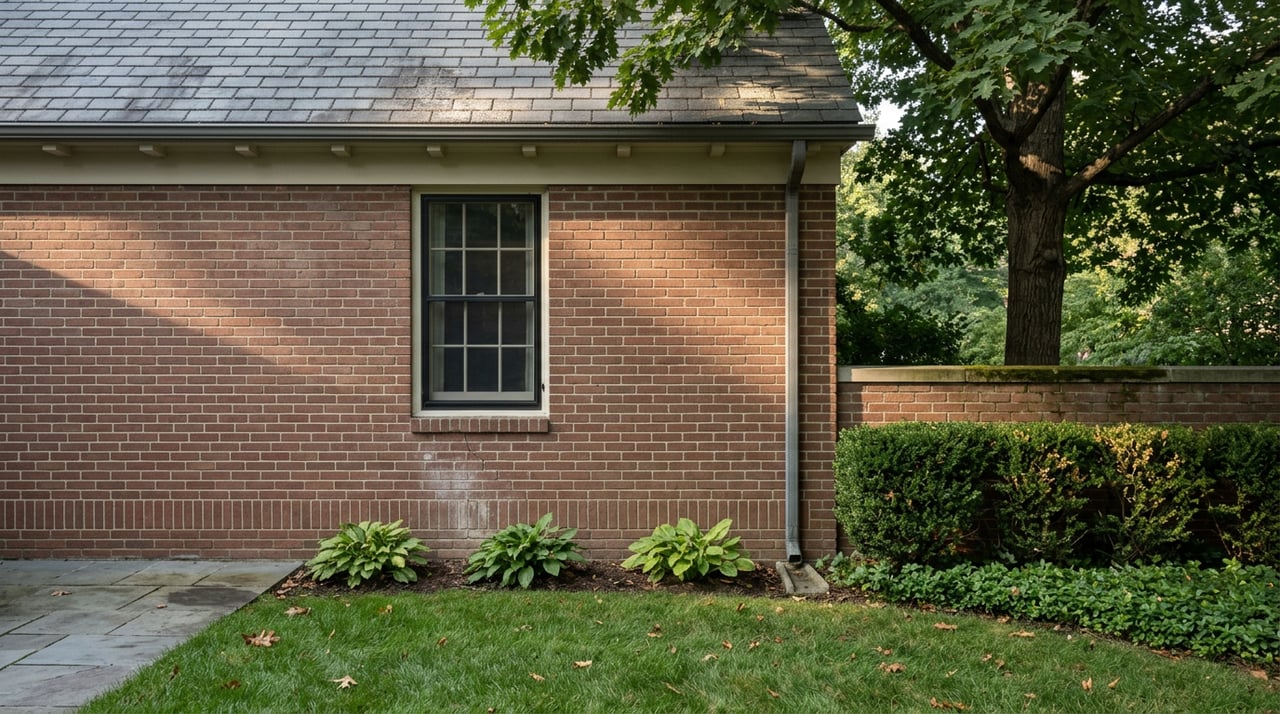
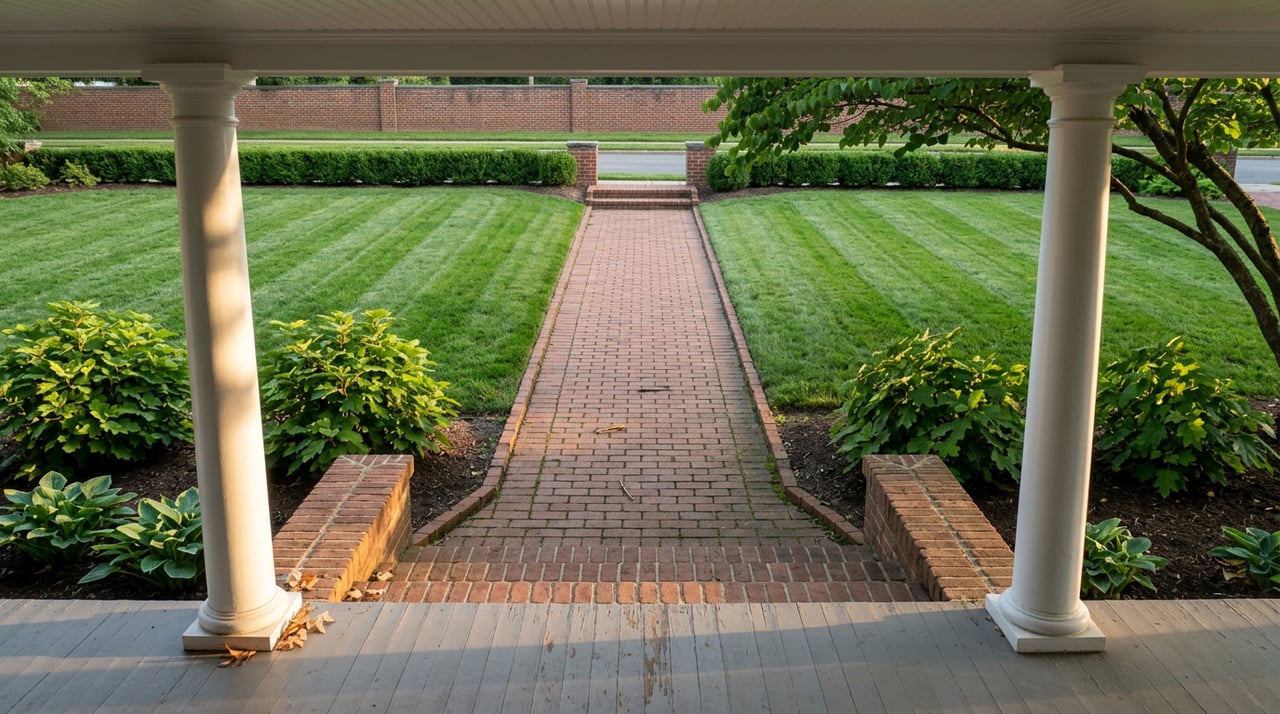
Stand on Western Avenue between the two Chevy Chases and you can watch a jurisdiction change without moving your feet. One curb is Washington, DC. The other is Montgomery County, Maryland. Same brick sidewalks, same century-old tree canopy, same name on both sides of the sign. Buyers treat "Chevy Chase" as a single decision: pick a house, pick a school, pick a price. It isn't. It's two governments running two different tax systems on top of two very different plans for what the neighborhood's civic core looks like in five years, and both of those differences show up long before you get to paint colors or lot size.
Same name, two governments
The DC side sits inside Ward 3, developed along the old Connecticut Avenue streetcar line, governed by DC law, DC Public Schools, and DC public works. The Maryland side isn't one government at all. It's a patchwork of incorporated municipalities and special taxing districts, including Chevy Chase Village, the Town of Chevy Chase, North Chevy Chase, Chevy Chase View, and Friendship Heights, each with its own council layered under Montgomery County. A buyer who assumes "Chevy Chase, MD" means one tax bill, one school assignment, one set of permitting rules is working from a mental model that doesn't match the address they're about to sign for.
That matters most at closing, and it matters most because of a tax change most buyers have never heard of.
The math changes shape, not just size
Everyone expects Maryland and DC to tax differently. What surprises people is which side ends up more expensive at the top of the market.
DC keeps it simple. Residential recordation and transfer tax runs 1.1% of the sale price on homes under $400,000 and 1.45% on everything at or above that number, applied to the full price. That rate doesn't climb any further no matter how many zeros are on the contract. A $900,000 DC rowhome and a $4 million DC colonial pay the identical 1.45% rate. Custom splits the bill: the seller typically covers the transfer tax, the buyer typically covers the recordation tax, so a deal at $1.4 million carries roughly $20,300 in transfer tax on the seller's side and roughly $20,300 in recordation tax on the buyer's side, for a combined 2.9% government bite. That ceiling never moves.
Montgomery County doesn't work that way anymore. The County Council passed Bill 17-23 in May 2023, and when it took effect that October, the county's recordation tax became tiered and progressive, with premium rates that get steeper as the price rises. Where the county used to apply a single premium rate above $500,000, it now applies three progressive tiers, topping out at $6.90 per $500 (about 1.38%) on any amount above $1 million. Add the county's flat 1% transfer tax and Maryland's 0.5% state transfer tax on top of that recordation schedule, and the combined marginal rate in the top bracket jumped from 2.85% to 3.77% almost overnight, according to the law firm Ballard Spahr's analysis of the bill.
That 3.77% top-bracket rate is higher than DC's flat 2.9% ceiling. For a neighborhood where Montgomery County's own market data put the average detached sale price near $2.27 million in early 2026, against roughly $723,000 for the attached homes and condos concentrated near Friendship Heights, a meaningful share of Chevy Chase, MD buyers are transacting well inside that top bracket. The jurisdiction most buyers assume is the tax break turns out to tax the high end of this specific market harder than DC does, dollar for dollar, above the $1 million mark.
There's an offset worth knowing if you're buying smaller. Maryland reduces its 0.5% state transfer tax for first-time buyers, and DC has its own reduced recordation rate of 0.725% for qualifying first-time buyers on homes up to $777,000 for fiscal year 2026. Neither program changes the shape of the curve at the price points where most Chevy Chase, MD detached homes actually sell, but both are worth asking your lender about if you're eyeing a condo near Friendship Heights or a rowhome closer to the $400,000 to $700,000 range on either side of the line.
| DC (flat) | Montgomery County (tiered) | |
|---|---|---|
| Base rate | 1.1% under $400k, 1.45% at/above | Tiered, steeper above $500k-$1M |
| Top-bracket combined rate | 2.9% (never rises further) | 3.77% since Bill 17-23, October 2023 |
| Who typically pays what | Seller: transfer tax. Buyer: recordation tax | Buyer and seller split negotiated; county + state + recordation all apply |
| First-time buyer relief | Reduced recordation to 0.725%, homes up to $777,000 (FY2026) | Reduced state transfer tax rate |
Two library sites, two very different 2026s
The tax code is the quiet friction. The louder one is sitting on Connecticut Avenue on both sides of the line, in the shape of two aging library and community center buildings, both built in the late 1960s, both overdue for replacement, both facing the exact same question this year: rebuild bigger, or just patch the roof.
DC answered first. In January 2026, Mayor Muriel Bowser's office announced that Rift Valley Capital, a DC-based development firm led by Bereket Selassie and Stephan Rodiger, had been selected to redevelop the Chevy Chase Civic Site in Ward 3. The plan replaces the current 1968 and 1971 buildings with a 23,500 square foot library and a 21,600 square foot community center, alongside 177 units of housing, 54 of them affordable, plus roughly 8,000 square feet of ground-floor retail. The project has been contentious. Some residents in the neighborhood have pushed back on adding housing above a library, and the Washington Post covered the debate as it played out in early 2026. But the project has a selected developer, a design lead, and a mayor's office publicly committed to it.
Two miles north, across the state line, the Maryland side of the same story took a different turn. Montgomery County had committed in 2022 to co-locating affordable housing with a redeveloped Chevy Chase library, after a push from advocacy groups and a council amendment led by Councilmember Will Jawando. But in 2026, County Executive Marc Elrich's capital budget proposal reverted to language calling for a simple renovation of the existing building, with construction pushed out to 2029, and county staff signaling they were now considering only 15 to 20 infill townhomes on the remainder of the site rather than the denser mixed-use plan advocates had won three years earlier. That reversal is now tangled up with this year's county executive race, with Jawando and Councilmember Andrew Friedson both running to replace Elrich and both on record pressing the administration on the reduced scope.
So the two library sites, sitting less than two miles apart, sharing a birth decade and a construction problem, are headed in opposite directions in the same calendar year. DC is building up. Maryland, at least for now, is renovating in place. If you're weighing "which side of Chevy Chase will feel more different in five years," that's a genuinely answerable question right now, and it doesn't run the direction most buyers assume.
What this actually changes for a buyer
None of this tells you which side to buy on. It tells you what you're actually comparing.
School assignment is address-specific, not side-specific. DC's Lafayette Elementary feeds into Deal Middle School and Jackson-Reed High School, and it draws from the Hawthorne, Barnaby Woods, Chevy Chase cluster. On the Maryland side, MCPS boundaries route different blocks to Chevy Chase Elementary, North Chevy Chase Elementary, Rosemary Hills/Chevy Chase Elementary, and eventually Bethesda-Chevy Chase High. Because Chevy Chase, MD is split among multiple towns and county districts, two homes a few blocks apart don't automatically share a school assignment. Confirm the boundary for the specific parcel, not the neighborhood name.
Price bands run differently by structure type, not just by jurisdiction. DC-side single-family and townhome listings have ranged roughly from the $900,000s to more than $5 million, with a median list price near $1.86 million as of mid-May 2026. On the Maryland side, detached homes averaged approximately $2.27 million in early 2026, while attached homes and condos near Friendship Heights averaged closer to $723,000, meaning the entry point into Chevy Chase, MD is far more accessible than the detached-home headline number suggests, provided you're comfortable with a townhome or condo rather than a house with a yard.
Renovation and permitting rules differ too. DC and Maryland handle tree removal, curb cuts, and renovation permitting through separate processes, and Maryland's version runs through whichever of its ten-plus municipalities and districts governs that block. If a Compass Concierge pre-sale renovation or a pop-top addition is part of your plan, the permitting timeline depends on which side of Western Avenue you're standing on, and sometimes which specific town within the Maryland side.
Frequently asked questions
Does DC or Maryland have a higher property tax rate overall? DC's effective property tax rate for owner-occupied homes runs lower than the sticker rate suggests once the homestead deduction applies, and Montgomery County layers state, county, and municipal rates that vary by the specific Chevy Chase municipality. Neither side is uniformly cheaper. The transfer and recordation tax comparison above is a one-time closing cost, separate from the annual property tax bill, and it's the piece most buyers overlook when comparing the two sides.
Is Chevy Chase, MD really one market? No. Ten incorporated municipalities and a special taxing district share the name, each with its own council and, in some cases, its own tax rate on top of the county's. Two homes described as "Chevy Chase, MD" can sit in different local jurisdictions entirely.
Will the DC library project actually happen on the announced timeline? A developer has been selected and the mayor's office has publicly backed the plan, but the next step is negotiating a land disposition agreement, and the project has drawn organized local opposition. Timelines on public-private redevelopment deals in DC have shifted before. Treat 2026 as the year the plan was set, not the year it necessarily breaks ground.
If you're weighing a house against a house across that line, the spreadsheet needs a row for closing costs and a row for what's about to get built two blocks away, not just a row for square footage. That's the kind of comparison Team Koki runs for buyers looking at both sides of Chevy Chase every month. Work With Us before you write an offer on either side of Western Avenue.