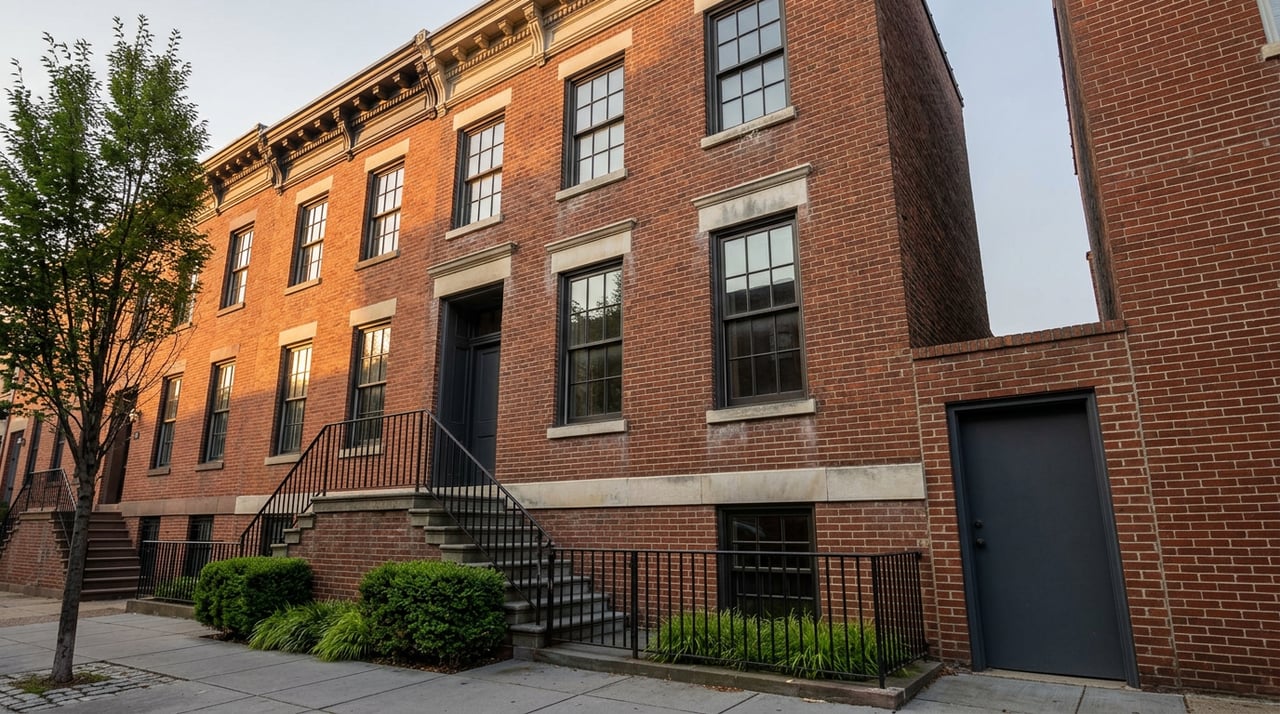
If you are buying a single condo unit inside a converted Dupont Circle rowhouse or a Logan Circle loft building, the District's tenant purchase law almost certainly will not touch your closing. If you are buying the whole building, the kind of pre-1920s rowhouse that a lot of Dupont and Logan's housing stock still is, with plans to renovate it and split it into units, that same law can add more than a year to your timeline. Which side of that line you land on changed on December 31, 2025, when the DC Council's RENTAL Act took effect and rewrote large parts of the Tenant Opportunity to Purchase Act.
Most buyers, and more than a few agents, are still working from the old rulebook. That is a problem specific to this neighborhood pair. Dupont and Logan are two of the densest concentrations in DC of exactly the housing type TOPA was written to regulate: aging rowhouses carved into two, three, or a handful of units. Knowing whether a specific building is now exempt, and why, is no longer optional homework before you write an offer.
The exemption that already covers most condo buyers
TOPA has exempted single-family homes since 2018, and it has separately exempted a single rental unit inside an already-established condo, co-op, or homeowners association for just as long. That second carve-out matters more in Dupont and Logan than the headlines suggest, because so much of the inventory here is exactly that: individually titled condo units inside buildings like The Cairo, Boston House, or Rainbow Lofts, the converted auto body shop on Logan's old Auto Row that became 21 loft condos in 2004.
If you are buying one of those already-platted units, even one currently occupied by a tenant, that transaction typically falls outside TOPA's reach. The building was condo-converted long ago. The unit you are buying is not being pulled out of rental stock for the first time.
The risk lives one step earlier in the process, with the buildings that have not made that conversion yet.
What changed on December 31, 2025
The RENTAL Act (formally the Rebalancing Expectations for Neighbors, Tenants, and Landlords Act of 2025) passed the DC Council on a 10-3 vote in September 2025, was signed by Mayor Bowser in November, and became law at the end of the year. Three changes matter most for anyone eyeing an unconverted rowhouse or small apartment building in Dupont or Logan:
| Provision | What it does | Who it actually affects |
|---|---|---|
| New construction exemption | Buildings that received a certificate of occupancy within the last 15 years are exempt from the Offer of Sale requirement (a Notice of Transfer is still required) | Almost nothing in Dupont or Logan's rowhouse core, since that stock predates 1920 |
| Small building exemption | 2-4 unit buildings are exempt from TOPA if the owner is not a corporation and does not hold multiple properties in DC | A meaningful share of Dupont and Logan's converted rowhouses, depending entirely on who is on the deed |
| Cooling-off period | Tenant associations in 5+ unit buildings cannot assign their purchase rights to a third party for the first 45 days after an offer of sale, unless the association is already registered with DHCD | Larger converted buildings and any investor hoping to move fast on an assignment |
The DC Department of Housing and Community Development's TOPA page still lays out the underlying statute, and Holland & Knight's summary of the RENTAL Act walks through the exemption language in more detail than most buyers will ever want to read themselves. The short version: the new construction exemption does almost nothing for this pair of neighborhoods, because almost none of the housing stock is under 15 years old. The small building exemption is the one that actually moves the needle here, and it turns on something a buyer cannot tell just by looking at the building.
Why unit count is the wrong first question
The instinct is to ask "how many units is it?" That is the second question, not the first. The first question is who owns it and how.
A three-unit converted rowhouse owned outright by a single individual who owns no other DC property can now be exempt from TOPA under the small building carve-out. The same three-unit building, if the deed sits under an LLC that also holds four other rental properties across the city, is not exempt. Nothing about the building itself changed. The ownership structure did.
This is the opposite of what most buyers assume walking into a listing. A grand Victorian on a quiet Dupont side street, chopped into apartments by a long-time owner-occupant landlord, may now carry less TOPA exposure than it did a year ago. A newer-feeling, better-renovated small building held by a portfolio investor may carry more, simply because of who is named on the title.
If you are the kind of buyer looking at a small multi-unit building with renovation or condo-conversion plans, the ownership history is worth pulling before you get attached to the property, not after you are already under contract.
The timeline math when the exemption does not apply
For buildings with five or more units, or smaller buildings that do not qualify for the exemption, the full TOPA process still runs on its own clock, and that clock is long. After an owner issues a formal Offer of Sale, tenants have 45 days to organize a tenant association and file a Statement of Interest, or 30 days if an association already exists. From there, tenants get up to 120 days to negotiate terms with the owner. If they choose to purchase, financing can take another 120 to 240 days depending on the lender.
Add those phases together and a fully contested TOPA process can run well past a year from offer to closing. That is not a worst-case scenario. It is the standard sequence when tenants decide to exercise their rights rather than assign them.
Most of the time, tenants do assign their rights, often to the original buyer or to a developer, rather than attempting to buy and manage the building themselves. Financing a tenant purchase is genuinely hard, which is a large part of why full tenant buyouts remain uncommon even four decades into the law's history. But "uncommon" is not "never." One of the more documented examples, a Northwest DC tenant association that partnered with a developer to exercise its rights at a building known as Hubbard Place, negotiated building upgrades and secured outfitted retail space for local businesses as part of the deal. That kind of outcome is exactly what the process is designed to make possible, and exactly what can extend your closing date if you are the buyer waiting on the other side of it.
What to actually ask before you write the offer
For anyone looking seriously at a Dupont or Logan property that is not already a titled, individual condo unit, a short list of questions before you write an offer will tell you more than the listing sheet does:
- When was the certificate of occupancy issued, and does the building qualify for the 15-year new construction exemption?
- How many residential units does the building currently have, and is that count reflected in the property records or only in the marketing materials?
- Who is the owner of record, and does that owner hold other residential property in the District?
- Has an Offer of Sale or Notice of Transfer already been issued to current tenants?
- If TOPA does apply, has your purchase contract built in a contingency for the tenant association's decision window, rather than assuming a standard 30- to 60-day close?
A title company that handles TOPA-heavy transactions regularly will flag most of this during the title search, but the earlier you know the answer, the less likely you are to fall in love with a building whose timeline does not match your own.
Frequently asked questions
Does TOPA apply if I am buying a resale condo unit that happens to be tenant-occupied? Generally no. A single rental unit inside an already-established condo, co-op, or homeowners association has been exempt from TOPA since 2018, regardless of whether that unit is currently rented.
If a building qualifies for the small building exemption, do I need any documentation at all? Yes. Even exempt buildings require the owner to notify tenants in writing of their exempt status, and a knowledgeable title company will want to see that notice as part of a clean closing package.
Is the 15-year new construction exemption ever relevant in Dupont or Logan? Rarely, given how old most of the housing stock is, but it is worth checking for any of the newer condo buildings built in the last decade and a half rather than assuming the exemption never applies.
Buying a small multi-unit building in a neighborhood built on rowhouse conversions means reading the fine print differently than you would in a newer part of the city. Koki Adasi and the team have spent years working through DC's title and tenant-rights process on exactly this kind of transaction, and can help you figure out which side of the line a specific building falls on before you write an offer that assumes the wrong timeline. Work With Us.